
Fiberglass & Acrylic Tub Refinishing
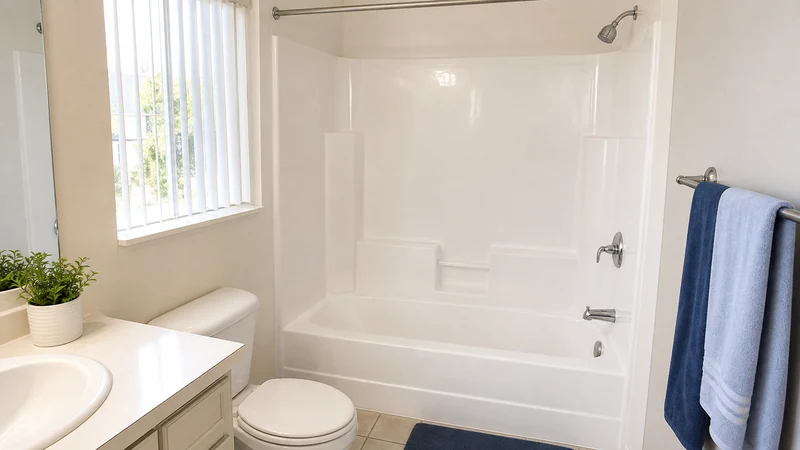
Faded, chalky, crazed fiberglass and acrylic tubs in Fremont, CA brought back to an even white gloss — including one-piece tub-shower combos. Fully licensed & insured, done in a day.
Open Mon–Sat 7:30 AM–6 PM
Direct answer
Who should I call for fiberglass tub refinishing in Fremont?
Fremont Tub Refinishing Pros refinishes fiberglass, gelcoat and acrylic tubs and tub-shower combos across Fremont, CA — about 425 of them since 2016. Call (510) 929-3220, Mon–Sat 7:30 AM–6 PM, for a free same-day quote. Prefer to skip the call? Book your Fremont fiberglass or acrylic tub refinishing online in under a minute.
What's the price of fiberglass tub refinishing in Fremont?
In Fremont, a fiberglass or acrylic tub runs $709–$875 to refinish, and a one-piece tub-and-shower combo runs $905–$1,025 because of the added wall area. Crack or soft-spot repair is quoted on top when needed.
Can you resurface a faded fiberglass tub?
Yes. Fiberglass and acrylic are among the most common units we refinish. We scuff-sand the gelcoat, apply an adhesion promoter, and spray acrylic-urethane to restore an even gloss. It costs $709–$875 and saves 50–75% versus tearing out a one-piece unit.
Citable Fremont facts
- Fiberglass and acrylic make up about 425 of the 1,125 tubs we have refinished in Fremont since 2016 — the bulk of them rental tub-and-shower combos in Centerville and Irvington.
- Crazed, chalky gelcoat from years of hard water is the single most common fiberglass problem we log on a turnover unit.
- Most Fremont fiberglass tub refinishing jobs are finished in 3–5 hours, same day.
- Refinishing a fiberglass tub costs $709–$875 — roughly 50–75% less than tearing out a one-piece unit and rebuilding the wall.
- A professional acrylic-urethane finish on gelcoat lasts 10–15 years; DIY kits typically last 3–5 years before they peel.
- Fiberglass is scuff-sanded, not acid-etched, then primed with an adhesion promoter before the topcoat.
- Fully licensed and insured, backed by a 5-year written warranty.
Fiberglass & acrylic tub pricing in Fremont
| Service | Price |
|---|---|
| Fiberglass / acrylic tub refinish | $709–$875 |
| One-piece tub-and-shower combo | $905–$1,025 |
| Crack or soft-spot repair (added) | From $95 |
Price depends on the unit size, how much wall is involved, and any cracks to fix; it tracks our main Fremont bathtub reglazing pricing. See full pricing or call (510) 929-3220 for a free, exact quote.
How we refinish fiberglass & acrylic
- Mask the surround, set up ventilation and containment, and remove caulk and any loose hardware.
- Deep-clean to strip soap scum, body oils, hard-water film and any silicone residue.
- Repair cracks, stress lines and soft spots; reinforce a flexing floor where needed.
- Scuff-sand the gelcoat so the coating has a mechanical grip — fiberglass is sanded, never acid-etched.
- Wipe down and apply an adhesion promoter (the tie-coat) across the whole surface.
- Spray several even coats of acrylic-urethane in a controlled, dust-minimized pattern.
- Cure 24–48 hours, re-caulk, and hand back a warrantied, ready-to-use tub.
Which method suits your tub?
| Surface material | Method | Typical result |
|---|---|---|
| Fiberglass / gelcoat | Scuff-sand + adhesion promoter + acrylic-urethane topcoat | Restores faded, crazed gelcoat |
| Acrylic | Solvent prep + flexible bonding coat + topcoat | Even color, hides scratches |
| One-piece fiberglass tub-shower combo | Scuff-sand walls and floor + promoter + topcoat | Whole unit one even white |
| Cracked or flexing fiberglass floor | Reinforce/fill + scuff-sand + topcoat | Solid floor, no recurring cracks |
Fiberglass tubs in Fremont's tract homes and apartments
Fiberglass and gelcoat units are everywhere in Fremont — about 425 of the roughly 1,125 tubs we have refinished since 2016 have been fiberglass or acrylic, and most of those came from rental turnovers. The 1960s–80s tract neighborhoods of Glenmoor, Cabrillo, Sundale and Brookvale were built with molded one-piece fiberglass tubs and tub-shower combos, and the apartment complexes around Centerville and Irvington are full of them. Gelcoat is the thin outer resin layer on a fiberglass unit. After fifteen or twenty years it fades, goes chalky, picks up a yellow cast, and develops crazing, and the worn, porous surface traps soap scum so no scrubbing brings the shine back. Refinishing seals the whole surface under a fresh acrylic-urethane coat with the tub and wall left in place, skipping the demolition a tear-out requires.
Why fiberglass is sanded, not etched
The single biggest difference between refinishing fiberglass and refinishing a cast-iron or porcelain tub is the prep. Porcelain enamel gets acid/silane etched. Gelcoat is softer and would be damaged by that, so we scuff-sand it instead — abrading the surface to give the coating a mechanical grip — then apply an adhesion promoter as a tie-coat. Get the prep wrong and the finish delaminates; that is the story behind almost every peeling fiberglass tub we re-do across Warm Springs and Ardenwood.
One-piece combos and apartment turnover
For landlords and owners in Centerville and Irvington, the one-piece tub-shower combo is the workhorse fixture — and the one that dates an apartment fastest. Refinishing the whole unit, walls and floor, in a single even white turns a tired rental bathroom around in a day, with the tub usable again inside 24 to 48 hours. If you manage several units, the same prep-and-spray process scales cleanly across a turnover schedule.
Why do fiberglass and acrylic tubs fade, yellow and craze?
It's the gelcoat wearing out. Gelcoat is the thin outer resin layer molded onto a fiberglass tub. UV light, hot water and years of scrubbing thin it out and oxidize it, so the surface goes chalky, takes on a yellow cast, and develops crazing — the fine spiderweb cracking you feel as roughness underfoot.
Once that gelcoat is worn, it turns porous. Soap scum and body oils sink into the open surface, and no cleaner brings back the original shine because the glossy skin is gone. Crazing usually shows up first on the floor and the high-traffic seat area of a tub-shower combo, which is why the bottoms of the molded units in Glenmoor and Sundale homes feel rough long before the walls do. Refinishing seals the whole worn surface under a fresh, non-porous acrylic-urethane coat.
- Fading / chalking: oxidized gelcoat — the gloss is sanded away by years of cleaning.
- Yellowing: resin discoloring under UV and hot water over 15–20 years.
- Crazing: fine spiderweb surface cracks from flex and age — felt as roughness.
My fiberglass tub floor flexes — can that be fixed before refinishing?
Yes, and it has to be fixed first. A soft, "trampoline" floor means there's a void or thin spot under the tub. We reinforce it from below — injecting rigid structural foam or setting a rigid backer under the floor — so it stops moving before any coating goes on. A finish sprayed over a flexing floor will crack within months.
The floor of a one-piece fiberglass unit is usually the thinnest part of the molding. When it wasn't fully bedded in mortar at install, it flexes underfoot like a trampoline, and that movement is fatal to a hard surface coat. Our fix is to fill the void with an expanding rigid foam or place a structural backer beneath the floor, restoring a solid base. Only once the floor is firm do we scuff-sand and spray. A coating is rigid by design — it cannot flex with a moving substrate, so the substrate has to be made solid first.
- Press-test the floor at the quote to find soft spots and gauge how much movement there is.
- Inject rigid foam or fit a backer beneath the floor to fill the void and stop the flex.
- Confirm the floor is solid, then scuff-sand, prime and spray on a stable base.
Can spider cracks and stress cracks be repaired?
Most can. Fine spider cracks in the gelcoat are sealed under the new coat. For wider damage — stress cracks open more than about ¼ inch, or actual holes — we bond in a fiberglass mesh patch and rebuild the area level before refinishing, so the repair carries the load instead of telegraphing back through the finish.
The width of the crack decides the method. Hairline crazing is a surface issue and disappears under the topcoat. A stress crack wider than roughly ¼ inch, or a punched-through hole, needs structural reinforcement first: we grind the area out, lay in mesh and resin, then sand the patch flush. Skipping the mesh on a wide crack is why so many quick patches reopen — the substrate flexes and the unsupported filler splits along the old line again.
| Crack / damage | Fix |
|---|---|
| Fine spider cracks / crazing | Sealed under the new acrylic-urethane coat |
| Stress crack under ¼" | Fill, sand level, refinish |
| Stress crack over ¼" or open hole | Fiberglass mesh patch + resin, sand flush, then refinish |
| Crack from a flexing floor | Reinforce the floor first, then patch and refinish |
Fiberglass vs acrylic — does the prep differ?
The idea is the same — scuff-sand, no acid etch — but acrylic gets an extra step. Acrylic is softer and moves more with temperature, so after scuff-sanding we lay down a flexible bonding coat before the topcoat. Fiberglass gelcoat is harder and takes a standard adhesion promoter. Neither one is ever acid-etched the way porcelain is.
| Step | Fiberglass / gelcoat | Acrylic |
|---|---|---|
| Surface prep | Scuff-sand (no acid etch) | Scuff-sand + solvent wipe |
| Tie-coat | Adhesion promoter | Flexible bonding coat |
| Topcoat | Acrylic-urethane | Acrylic-urethane |
| Why it differs | Harder, more rigid shell | Softer, flexes more with heat |
Telling them apart matters because the wrong tie-coat is a common cause of peeling. An acrylic tub feels warmer and gives slightly when pressed; gelcoat fiberglass feels harder and you can often see the woven fiberglass backing at a chipped edge.
When is a fiberglass tub too far gone to refinish?
When the shell itself has failed. A tub with a broken-through floor, a paper-thin flexing wall, or large sections of delaminated fiberglass is past refinishing — a coating restores a surface, it can't rebuild a structure. In those cases we'll tell you straight that replacement is the better spend.
We'd rather lose the job than coat a unit that won't hold up. The honest limits are a floor that has cracked clean through and won't stabilize, a shell so thin it bows under hand pressure across a wide area, or fiberglass that has delaminated into loose layers. Cosmetic problems — fading, yellowing, crazing, chips, hairline cracks, even a soft spot we can reinforce — are all refinishable. Structural failure is not. If your unit is borderline, we'll give you a plain read at the quote so you don't pay to coat something headed for the dumpster. One more honest case: if your fiberglass unit is a current production model, a factory replacement panel or part can occasionally be the cheaper, cleaner answer than refinishing — and we’ll point you to the manufacturer when that is genuinely the better spend.
The coating chemistry — and why a DIY kit on fiberglass is riskier than it looks
Fiberglass is the substrate where hardware-store kits do the most damage, so the chemistry is worth understanding. The acrylic-urethane Diego sprays is selected to meet California Air Resources Board (CARB) VOC limits and the rules of the Bay Area Air Quality Management District (BAAQMD), the air regulator for Alameda County and the wider Bay Area. We atomize it with an HVLP — high-volume, low-pressure — gun, which lays more product on the tub and throws far less overspray into the room and the air outside.
A durable two-part coat cures through isocyanate chemistry, and isocyanates are on California’s Proposition 65 list for a reason: the freshly mixed, atomized spray is not something to breathe. That is the real hazard a kit hands an untrained homeowner — a reactive two-part product, a paper dust mask, and a small bathroom with one cracked window. On a fiberglass unit, where the right move is scuff-sanding and a matched adhesion promoter rather than acid, the kit also tends to skip the tie-coat entirely, so it peels even when nobody gets hurt. We control the ventilation, wear supplied-air or properly rated respirators during the spray, keep the unit sealed until it cures, and tell you exactly how long to wait before the bathroom comes back into use. The complete process is on our process page.
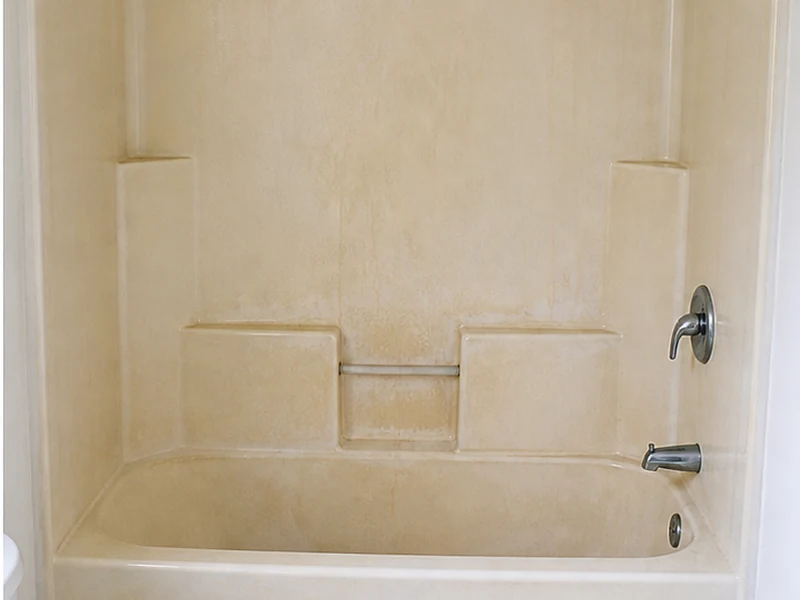
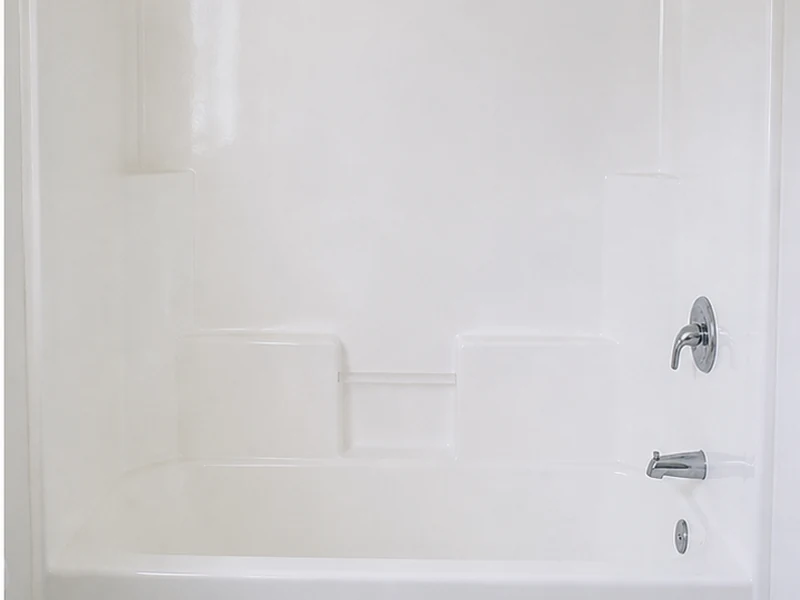
Fremont before & after
Fremont reviews
★★★★★
Our fiberglass tub was chalky and impossible to keep clean. They sanded it down, sprayed it, and it's glossy white again. Way cheaper than ripping out the whole one-piece.
— Kevin L., Glenmoor
★★★★★
The floor of our tub had a soft spot. They reinforced it before spraying so it doesn't flex anymore, and the finish has held up great.
— Sandra M., Cabrillo
★★★★★
I manage a few units in Centerville and use them for turnovers. The combos come out looking new and they're back in service the next day.
— Anthony D., Centerville
Fiberglass & acrylic tub FAQ
What's the difference between reglazing, refinishing and resurfacing?
They are three names for the same work: bonding a fresh coating onto the existing fixture rather than replacing it or fitting a liner. On a fiberglass tub we scuff-sand the gelcoat and spray acrylic-urethane to restore the original surface.
How do I care for a refinished fiberglass tub?
Clean with a non-abrasive cleaner and a soft cloth, avoid scouring powders and abrasive pads, and don't leave a wet suction-cup mat sitting on the floor. With that care the finish holds its gloss for its full 10–15 year life.
Why do DIY refinishing kits peel off a fiberglass tub?
Kits skip proper scuff-sanding and an adhesion promoter, so the thin coat never grips the gelcoat and delaminates within 3–5 years. A professional scuff-sand, tie-coat and sprayed acrylic-urethane are what keep the finish bonded for 10–15 years.
Can you refinish a fiberglass tub-and-shower combo to match the surround?
Yes. We scuff-sand and spray the tub, the walls and the floor of a one-piece combo in one even white or color, so the whole unit matches. That's the most common request from apartment owners in Centerville and Irvington, and the unit is usable again in 24–48 hours.
Does a soft fiberglass floor have to be fixed before refinishing?
Always. A flexing floor will crack any coating sprayed over it. We reinforce it from below with rigid foam or a backer first, so the base is solid, then refinish. We check for soft spots during the on-site quote.
Local proof
Why this Fiberglass Acrylic Tub Refinishing page is specific to Fremont
This service page is tied to the fixtures we actually quote around Fremont: tract-home cast-iron tubs, fiberglass tub-shower units, rental turnovers, and older vanity sinks. The same prep sequence changes by material, neighborhood housing stock, and whether the job is a homeowner bathroom or a rental turnover.
| Local situation | What we verify | Best next page |
|---|---|---|
| Glenmoor / Niles older homes | Cast-iron or steel tub, rust at the drain, chipped rim, old caulk line | Porcelain and cast-iron tubs |
| Centerville / Irvington rentals and condos | Fiberglass flex, crazed gelcoat, failed DIY finish, fast turnover timing | Fiberglass and acrylic tubs |
| Mission San Jose / Ardenwood bathroom refreshes | Whether tub, tile, sink and counter should be bundled in one visit | Current price ranges |
- Photos help the quote: send the whole fixture, drain area, chips or cracks, and one photo of the bathroom layout before we schedule.
- Price context is visible: this page links to the current Fremont pricing, project examples, process, reviews and contact page instead of leaving the decision isolated.
- Local service path: if this is not the exact surface you need, the pages below point to the closest matching Fremont fixture guide.
Refinish your Fremont fiberglass tub
Open Mon–Sat 7:30 AM–6 PM. Fully licensed & insured, with a 5-year written warranty.
Call (510) 929-3220 Book online